Enzyme Peeling: the gentle exfoliation for sensitive skin
In this article
Note: This article contains affiliate/advertising links. As an Amazon Associate we earn from qualifying purchases. If you click such a link and buy something, we may receive a small commission – at no extra cost to you.
Do you want to free your skin from dead skin flakes, but find classic grain-based scrubs too rough? Then an enzyme peeling could be exactly the right choice for you. Instead of mechanical rubbing, it dissolves dead skin cells via a chemical-biological process – gently, without scratching and without micro-injuries. Especially for sensitive, reddened or blemish-prone skin, this is a real alternative. In this guide you will learn how an enzyme peeling works, who it suits and what you should keep in mind when applying it.
What is an enzyme peeling?
An enzyme peeling belongs to the group of enzymatic peelings and therefore to the chemical peelings – in contrast to mechanical peelings, which work with small grains, brushes or sponges. Instead of friction, the topmost skin layer is gently removed here by enzymes.
These enzymes usually come from fruits or plants. Particularly common are:
- Papain from the papaya
- Bromelain from the pineapple
- Pumpkin enzymes
- fungus-based enzymes
The enzymes break down the protein bonds that hold dead skin flakes together on the surface. As a result, the dead cells loosen and can then be easily removed. The living skin cells underneath remain untouched – that is the big difference compared with scratchy peelings.
How does an enzyme peeling work on the skin?
When applied, the enzymes begin to loosen the so-called horny layer. This topmost layer consists of cells that have already fulfilled their task and are naturally shed. With increasing age or with dry skin, this process slows down, and the skin appears dull, uneven or rough.
An enzyme peeling supports the natural cell renewal and ensures that your skin once again:
- appears smoother and more even,
- looks fresher and more radiant,
- can absorb care products better,
- is less prone to clogged pores.
Unlike stronger acid peelings, an enzyme peeling barely penetrates into deeper skin layers. It works primarily on the surface and is therefore particularly well tolerated. The effect is more subtle than with more aggressive methods, but in turn significantly lower in risk.
Who is an enzyme peeling suitable for?
The biggest advantage: sensitive skin usually tolerates an enzyme peeling very well. If your skin quickly reacts with redness, a feeling of tightness or irritation when using grainy scrubs, the enzymatic variant is often the better choice.
An enzyme peeling is particularly suitable for:
- dry and sensitive skin that tolerates mechanical friction poorly
- skin prone to redness – even with visible little veins, a gentle approach can make sense; you can read more about this in the article on Couperose on the face: treating and reducing visible little veins
- blemished skin where you want to avoid squeezing or scrubbing
- more mature skin that benefits from gentle cell renewal
If you have an acute skin condition, open areas, severe acne or an inflammatory skin condition such as rosacea, you should have the application clarified by a doctor beforehand. Caution is also advised if you have a known allergy to the fruits contained.
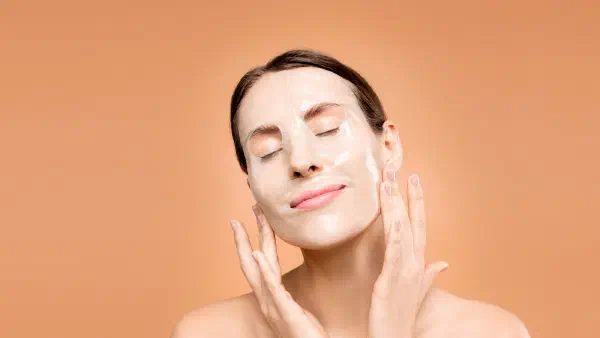
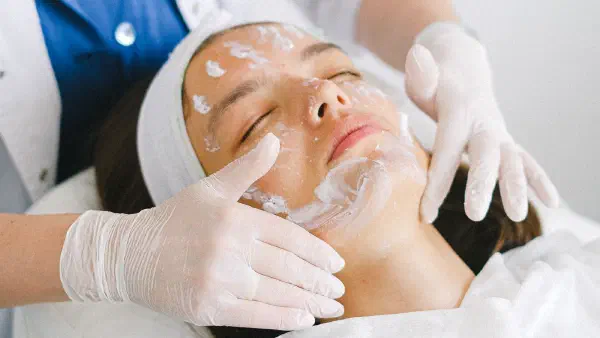
How to apply an enzyme peeling correctly
The application is uncomplicated, but you should keep a few points in mind:
- Cleanse your face thoroughly and pat it dry, or leave it slightly damp depending on the product.
- Apply the peeling evenly, leaving out the eye and lip area.
- Some enzyme peelings need warmth or moisture to become active – a warm cloth can support the effect.
- Let the product work in according to the instructions, usually for a few minutes.
- Rinse everything off with lukewarm water and then care for the skin.
Once or twice a week is sufficient for most skin types. More often is not better: even a gentle peeling can disrupt the skin barrier if applied too frequently.
Care after the peeling
After the peeling, your skin is particularly receptive. Treat it to a moisturizing care, for example with hyaluronic acid or soothing active ingredients. Reliable sun protection during the day is also important, since freshly peeled skin reacts more sensitively to UV radiation.
If you want to integrate the enzyme peeling into a larger care strategy, it can be worth looking at more advanced methods – you can find an overview in the article on Anti-aging treatments at a glance: what really works.
Enzyme peeling or mechanical peeling?
Both types of peeling have their place. A mechanical peeling with grains removes flakes immediately and noticeably and gives an instant feeling of freshness – but can irritate the skin if you rub too vigorously. An enzyme peeling works more gently, more evenly and without a scratching effect, which is why it is particularly well suited for sensitive skin.
As a rule of thumb: if your skin reacts easily with irritation, reach for the enzymatic variant. If you like the distinct peeling sensation and your skin has no problems with it, you can also alternate between both methods. Always listen to the signals of your skin.
Frequently asked questions (FAQ)
How often should I use an enzyme peeling?
For most skin types, once or twice a week is enough. Very sensitive skin often gets by with just one application per week. Observe how your skin reacts and adjust the frequency accordingly.
Is an enzyme peeling also suitable for very sensitive skin?
Yes, it is particularly well suited for that, because it works without friction. Even so, you should first test the product on a small area. If you have a known skin condition or allergy, clarify the application with a doctor when in doubt.
What is the difference compared with a fruit acid peeling?
A fruit acid peeling works with acids such as AHA or BHA and can act more deeply. An enzyme peeling stays mainly on the skin surface and is usually milder and better tolerated, but in turn less intense.
Do I need sun protection after the enzyme peeling?
Yes. Freshly peeled skin is more sensitive to UV radiation. Apply sun protection during the day to prevent irritation and pigment spots.