Facial Treatment at the Beauty Salon: Step-by-Step Process
In this article
A professional facial treatment at the beauty salon is far more than just a bit of cream on the skin. It follows a well-thought-out process that deeply cleanses, nourishes and relaxes your skin. If you have never been to a beautician before, you might wonder what exactly happens in the treatment chair and in what order. In this guide, we walk step by step through a classic facial treatment – from the initial skin analysis to the final care.
Step 1: Skin Analysis and Consultation
Before anything begins, the beautician takes a close look at your skin – often with a magnifying lamp or under special light. This is used to assess whether your skin is rather dry, oily, sensitive or combination skin, and whether there are particular features such as blemishes, redness or the first fine dryness lines.
During this conversation, you should also speak honestly about your skincare habits, allergies and any skin problems. Only then can the right treatment be selected. The skin analysis is the foundation for all the following steps, because every skin type needs different active ingredients.
Step 2: Cleansing
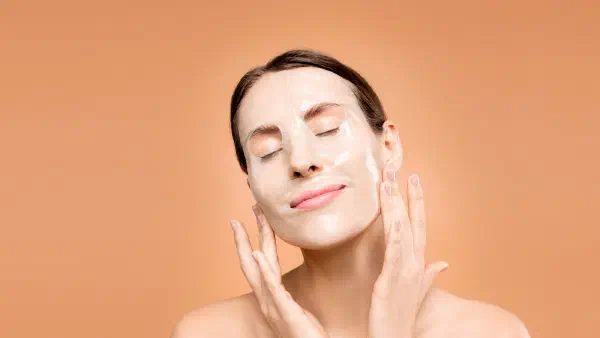
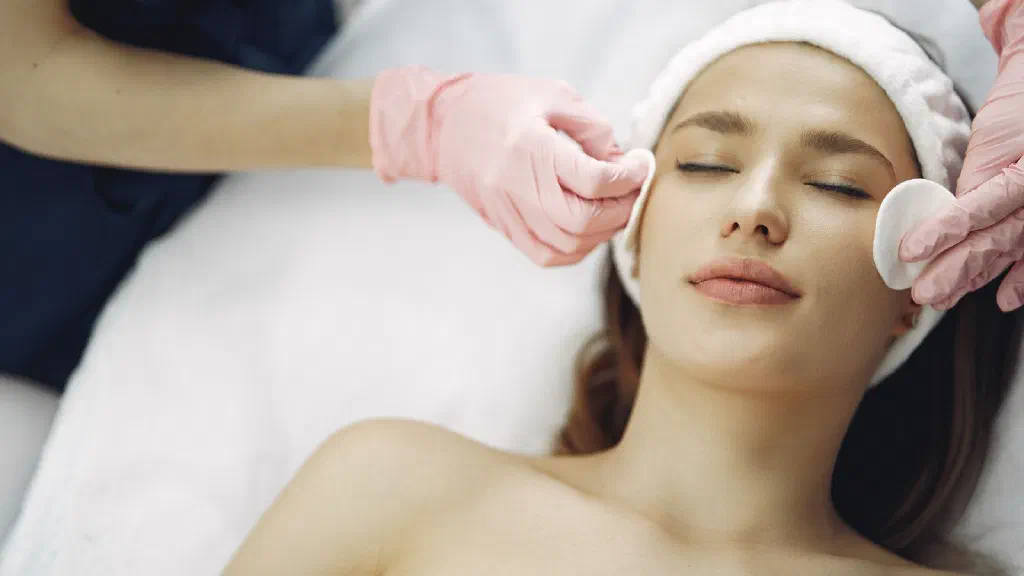
The treatment itself begins with thorough cleansing. First, make-up, sunscreen and surface dirt are removed with a mild cleansing milk or a cleansing gel. Often a second cleanse follows – known as double cleansing – so that the skin is truly free of residue.
The skin is then clarified with a toner. This removes the last traces and prepares the skin for the next care steps.
Step 3: Exfoliation
An exfoliation loosens dead skin flakes. There are broadly two types:
- Mechanical exfoliation: Fine granules or brushes gently slough off the uppermost layer of skin.
- Enzyme or fruit acid peeling: Active ingredients chemically dissolve the bonds between the skin flakes, entirely without friction.
Which exfoliation is used depends on the condition of your skin. Sensitive skin often tolerates a gentle enzyme peel better. If you are more interested in the chemical variant, read in our article on the fruit acid peel how it works on the skin.
Step 4: Deep Action and Extraction
To open the pores, the skin is now warmed – for example with warm compresses or a vaporozone (steam) device. The softened skin makes it easier to loosen blackheads and clogs.
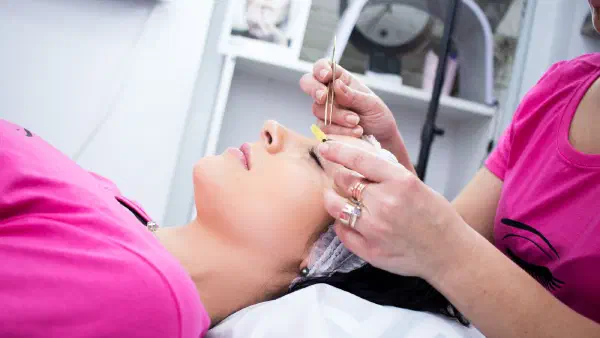
If needed, manual extraction follows: the beautician carefully removes blackheads and blemishes with the fingers (in tissues) or a special instrument. This step can be slightly uncomfortable, but it is very effective on blemished skin. Afterwards, the skin is soothed and disinfected to prevent irritation.
Step 5: Massage
The facial massage is for many the most relaxing part of the treatment. With gentle, circular movements, active ingredients are worked into the skin, circulation is stimulated and the facial muscles are loosened. Often the massage is extended to the neck and décolleté.
Besides the feel-good effect, the massage supports the lymph flow, which can help reduce slight swelling and promote a fresher complexion.
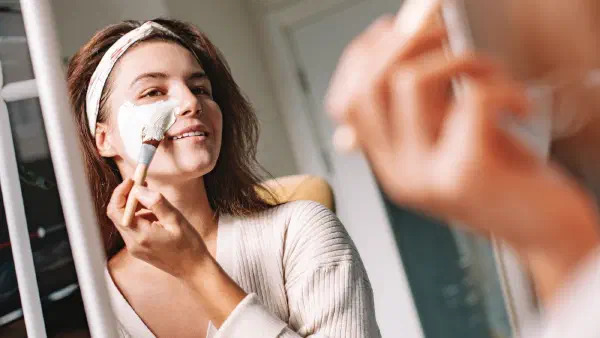
Step 6: Mask
Depending on the skin’s needs, a suitable facial mask is now applied. Typical varieties are:
- Moisturizing masks for dry, tight skin
- Clarifying masks with clay for oily or blemished skin
- Soothing masks for sensitive, reddened skin
While the mask takes effect, you can simply relax. This break of around 10 to 20 minutes lets the active ingredients absorb and rounds off the treatment.
Step 7: Final Care
Finally, the skin is supplied with the appropriate care products. These usually include a serum, an eye cream, a day care product and – very important – sun protection, in case you go outside afterwards. Freshly exfoliated skin is, after all, more sensitive to light.
Often you will also receive tips for home care at the end. If you would like to deepen the results, you can talk to the beautician about complementary treatments such as microneedling.
How Often Is a Facial Treatment Worthwhile?
As a rule of thumb, an interval of about four to six weeks applies – this roughly corresponds to the skin’s renewal time. With acutely blemished skin, shorter intervals can make sense at first, while a purely feel-good treatment can also take place less frequently. The exact recommendation depends on the condition of your skin and your goals.
Important: A facial treatment at the beauty salon does not replace medical treatment. With persistent skin problems, severe acne or unexplained changes, you should, when in doubt, have it checked by a doctor or dermatologist.
Frequently Asked Questions (FAQ)
How long does a facial treatment at the beauty salon take?
A classic facial treatment takes about 60 to 90 minutes depending on its scope. Short treatments without elaborate extraction are often done in 30 to 45 minutes, while more intensive treatments with additional steps can also take longer.
Does the extraction hurt?
Manual extraction can be slightly uncomfortable in sensitive areas such as the nose and chin, but it is usually quite bearable. An experienced beautician works gently and soothes the skin in between. If you are very sensitive, let them know beforehand.
What should I keep in mind before and after the treatment?
It is best to come without make-up or with little make-up. After the treatment, the skin is more sensitive, so you should avoid intense sun, sauna and irritating care products for one to two days. Sun protection is especially important.
Which skin type is a facial treatment suitable for?
In principle, every skin type benefits – from dry through oily to sensitive. What matters is that products and steps are individually tailored. That is exactly what the skin analysis at the beginning is for.