Aromatherapy: Understanding Essential Oils and Their Effects
In this article
Note: This article contains affiliate/advertising links. As an Amazon Associate we earn from qualifying purchases. If you click such a link and buy something, we may receive a small commission – at no extra cost to you.
Scents often touch us before we consciously think about them: the smell of lavender helps many people breathe more calmly, while fresh citrus notes have an invigorating effect. This very interplay is what aromatherapy makes use of. It works with the concentrated fragrances of plants, the essential oils, to promote well-being, relaxation and a pleasant indoor atmosphere. In this guide, you will learn how essential oils are used, how they affect body and mind and what to keep in mind when it comes to selection, dosage and safety.
What Is Aromatherapy Exactly?
Aromatherapy is a method that works with the fragrances of plants. These are extracted from flowers, leaves, peels, woods or roots – often through steam distillation, and in the case of citrus fruits also through cold pressing of the peels. The result is an essential oil: a volatile, strongly fragrant liquid in which the characteristic aromatic compounds of the plant are concentrated.
Important to understand: these oils are not fatty plant oils like olive or almond oil. They evaporate without residue and are so concentrated that they should never be applied undiluted over large areas of the skin. In practice, aromatherapy is used above all for relaxation, to promote a pleasant room scent and as a supporting element of wellness rituals.
How Essential Oils Affect Body and Mind
The effect works through two main pathways. First, through the sense of smell: fragrance molecules reach the olfactory mucosa and are closely linked to the brain regions responsible for emotions and memories. This explains why certain scents calm or invigorate us and are connected to personal memories. Second, individual ingredients can be absorbed through the skin when applied in diluted form.
Common application goals are:
- Relaxation and balance, for example with lavender, bergamot or sandalwood.
- Freshness and concentration, often with lemon, peppermint or rosemary.
- A cozy indoor atmosphere, for example with orange or stone pine.
- Accompanying massage and care rituals in a fatty carrier oil.
A realistic perspective is part of this: aromatherapy is no substitute for medical treatment. In the case of complaints, persistent symptoms or illnesses, you should have these checked by a doctor when in doubt.
An Overview of Application Methods
Through the Room Air
The simplest form is inhalation through the room. A diffuser, a fragrance lamp or a few drops on a cloth distribute the aroma. Just a few drops are enough – more oil does not mean more effect, but often only an obtrusive smell. Air out rooms regularly and dose sparingly, especially when children, pregnant women or pets are present.
On the Skin – Always Diluted
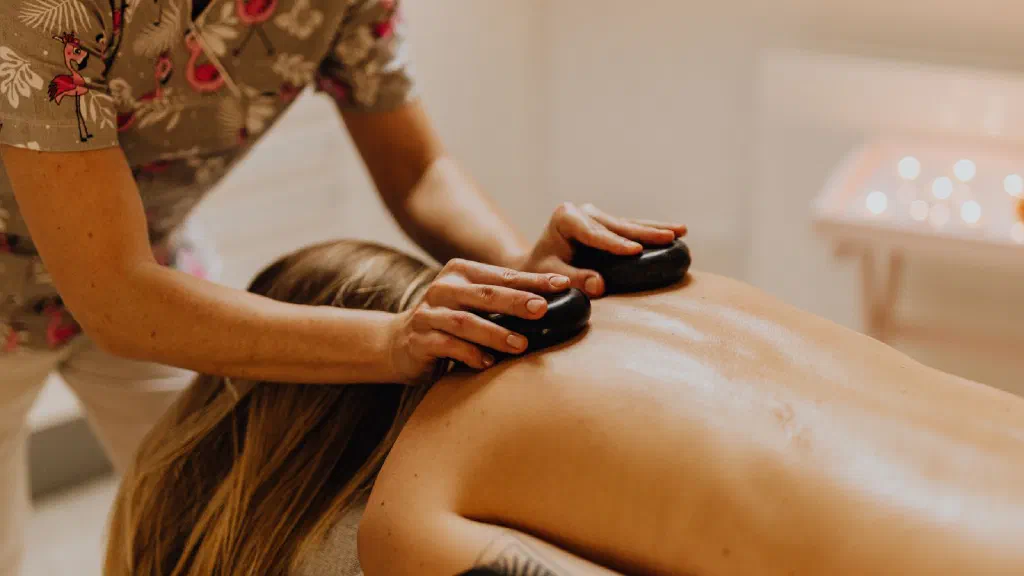
For the skin, essential oils are mixed into a fatty carrier oil such as almond, jojoba or sunflower oil. A common guideline for adults is around 1 to 3 percent, so roughly 1 to 3 drops of essential oil per 5 ml of carrier oil. These blends are well suited for gentle massages. This is exactly where an aromatherapy oil massage with essential oils comes in, combining gentle touch with fragrance. If you are interested in oil massages, you will find additional inspiration in the article on the Ayurveda massage: process and effects of oil massage.
In the Bath and With Affusions
In a full bath, essential oils are not added directly to the water, since they do not combine with water. Instead, they are mixed beforehand with an emulsifier such as cream, honey or a neutral bath oil. With water-based wellness rituals, too, it is worth looking at proven applications – for example in our guide to Kneipp applications for at home: water affusions explained simply.
What to Keep in Mind Regarding Quality and Selection
The range of products is large, and not every bottle labeled “aroma oil” actually contains a pure essential oil. Pay attention to the following points:
- Clear designation: the botanical plant name (in Latin) and the note “naturally pure” or “100% essential”.
- Origin and extraction: information on the plant part and the production method speaks for transparency.
- Dark glass: brown or blue bottles protect the sensitive ingredients from light.
- Terms such as “perfume oil” or “fragrance oil” often indicate synthetic blends that are not intended for aromatherapy in the narrower sense.
Store your oils cool, dark and tightly sealed. This way the fragrance and quality are preserved for a longer time. Discoloration or an altered, rancid smell are signs that an oil is past its prime.
Safety: These Rules Are Part of It
Because essential oils are so concentrated, careful handling is important:
- Never apply undiluted over large areas of the skin.
- Test skin tolerance: a small, diluted amount in the crook of the arm shows whether you react sensitively.
- Avoid the eyes and mucous membranes and keep oils out of the reach of children.
- Caution with citrus oils: some can make the skin more sensitive to light – avoid direct sun after application.
- Do not take internally, unless it is expressly supervised by a professional.
Particular restraint is advised during pregnancy, breastfeeding, with asthma, allergies, epilepsy or with small children. In these cases the rule is: when in doubt, have the application checked by a doctor before you start.
Frequently Asked Questions (FAQ)
How many drops of essential oil do I need for one application?
Usually a few drops are enough. For a room diffuser, 3 to 6 drops are often sufficient, and for skin blends about 1 to 3 drops per 5 ml of carrier oil. Start sparingly and only increase if necessary – more oil does not necessarily intensify the effect.
Can I apply essential oils undiluted to the skin?
As a rule, no. Essential oils are highly concentrated and can irritate skin and mucous membranes when undiluted. Always mix them with a fatty carrier oil and test the tolerance on a small spot.
How do I recognize a high-quality essential oil?
Good indicators are the botanical plant name, a note on naturally pure quality, information on origin and extraction, as well as bottling in dark glass. Terms such as “fragrance oil” or “perfume oil”, on the other hand, often point to synthetic blends.
Is aromatherapy suitable for everyone?
Many people tolerate the application well, but there are exceptions. During pregnancy, breastfeeding, with allergies, asthma or with small children, particular caution is advised. When in doubt, it is best to have the suitability checked by a doctor.