Lomi Lomi Massage: the Hawaiian temple massage
In this article
If you long for a massage that feels less like a treatment and more like a journey, then Lomi Lomi massage is exactly the right choice. This traditional Hawaiian method works with long, dance-like flowing strokes that wash over your body like gentle waves. Instead of treating individual muscle areas in isolation, it treats you as a whole - body, breath and mood blending into one another. It is precisely this uninterrupted movement that gives Lomi Lomi its distinctive, almost meditative character.
What defines Lomi Lomi massage
In Hawaiian, “Lomi” means something like “to knead”, “to rub” or “to press” - the doubling Lomi Lomi reinforces this meaning. It is also often referred to as a temple massage, because historically it took place within a ritual, mindful setting and was cultivated as part of the Hawaiian healing tradition.
At its core lies the Aloha attitude: Aloha means more than just a greeting, it describes an inner stance of love, respect and connectedness. Ideally, whoever gives a Lomi Lomi works with full attention and calm - and that is noticeably passed on to you as the person being treated.
The most striking feature, however, is the movements themselves. The hands and above all the forearms glide in long paths across your body, often spanning several body regions - for example from the shoulder blade to the hip in a single stroke. These continuous strokes leave hardly any pauses, which makes it easier for your nervous system to settle into a state of deep relaxation.
How a Lomi Lomi treatment unfolds
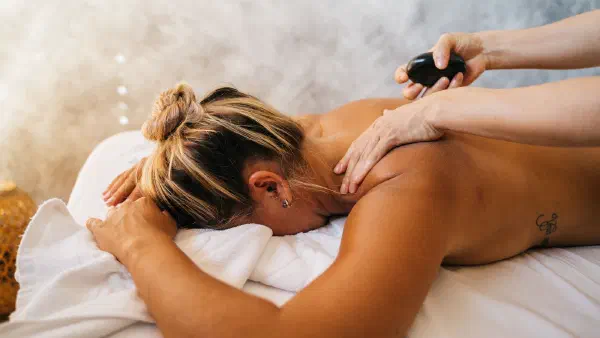
A typical session usually lasts between 60 and 90 minutes. You lie on a massage table, often covered only by a cloth that is moved during the treatment so that only the area currently being worked on is exposed. Plenty of warm oil is used so the movements can flow effortlessly and without friction.
The treatment is generally structured like this:
- Arriving and finding calm: At the start, you take a moment to settle down. Gentle music and dimmed light support the atmosphere.
- Broad strokes: The treatment begins with long, calm strokes that warm up your body and prepare it for the deeper work.
- Rhythmic alternation: Hands and forearms work alternately, often accompanied by light rocking and cradling movements that involve your whole body.
- Winding down: At the end, the movements become calmer again so that you slowly return.
It is characteristic that the practitioner moves around the table, creating a continuous flow. Some providers combine the massage with breathing exercises or a short attunement at the beginning.
Effects: what you can expect from Lomi Lomi
The strength of Lomi Lomi lies above all in its relaxing, releasing effect. The long, even strokes can help loosen muscular tension and create a feeling of lightness. Many people find the continuous, enveloping touch especially soothing and calming.
Possible effects that are frequently described:
- a deep sense of relaxation and inner calm
- the release of tension in shoulders, back and neck
- a pleasant boost to well-being through the rhythmic touch
- an impression of letting go on an emotional level as well
Important: a massage does not replace medical treatment. With acute complaints, illnesses or uncertainties you should clarify this with a doctor or specialist if in doubt before booking a Lomi Lomi.
Who is Lomi Lomi suitable for?
Lomi Lomi is particularly suitable if you wish for a holistic, gentle and at the same time intensive experience. It is a good choice for stressed people who find it hard to switch off, as well as for anyone who likes massages with lots of skin contact and body movement.
You should be cautious in certain situations. In some cases a specially adapted method makes more sense. If you are pregnant, for example, a Massage during pregnancy: gentle, safe and beneficial with appropriately trained therapists is the better choice. With skin injuries, inflammation, fever or recent surgery, a massage is also not advisable.
If targeted pressure points interest you more than broad strokes, the Reflexology massage: reaching the body through the feet might also be exciting for you - it follows a completely different, point-based approach. If you prefer something firmer and more technical, the Chinese Tuina massage with its pushing and grasping is worth a look.
What to look out for when choosing
Since Lomi Lomi is not a protected term, it is worth looking at qualifications. Pay attention to the following points:
- the training and experience of the practitioner in the field of Hawaiian massage
- a clarifying preliminary conversation in which you can raise wishes and possible limitations
- a calm, clean environment with a pleasant temperature
- high-quality, well-tolerated massage oils, especially if you are prone to sensitive skin
Before the treatment, talk openly about your expectations, the desired pressure and sensitive areas of the body. That way the massage becomes exactly your experience.
Frequently asked questions (FAQ)
What does a Lomi Lomi massage feel like? It feels soft and flowing, almost like gentle waves running across the body. The long, continuous strokes create an enveloping, soothing feeling that many describe as deeply relaxing.
How often should I have a Lomi Lomi massage? That depends entirely on your needs. Some enjoy it as an occasional feel-good ritual, others schedule it regularly to reduce stress. Listen to your body and treat yourself to the massage whenever it does you good.
Do I have to undress completely for a Lomi Lomi? Usually you are treated covered only by a cloth that is moved during the massage. What feels comfortable for you can be discussed beforehand - your sense of well-being comes first.
Is Lomi Lomi massage suitable for everyone? For healthy people it is generally well tolerated. In case of pregnancy, acute complaints or illnesses, you should have it clarified by a doctor or specialist beforehand.